There's no doubt that the 80's, as a decade, has been a very prolific one, musically speaking, in terms of revealing an incredible amount of talented Pop artists to the world.
It's also true that some of them might have been a one hit wonder only or not lasting very long for reasons, perhaps, related to either creativity drainage, or simply because they had not been able to move forward, stylistically and lyrically in the next decades.
One of the most beautiful stories born in that decade, is related to the British Pop band called Prefab Sprout, formed by brothers Paddy and Martin McAloon, Wendy Smith and Neil Conti, who had their first major breakthrough record worldwide thanks to their second album called Steve McQueen in 1985.
Right from the start, it was clear that Paddy McAloon was (and still is) the driving force of the band, combining inspired and occasionally witty lyrics with dreamy, melodic and very catchy songs, a winning formula that allowed Prefab Sprout to spread their popularity on a global scale.
As the decades went by, almost all the band members left Prefab Sprout, with Paddy McAloon being the only one left driving forward the band’s name, despite health issues like Ménière's disease and an issue related to a detached retina, slowing enormously and obviously any music related activity to McAloon, considered by many one of the most talented and inspired songwriters of the last half a century of music.
But a great story like Prefab Sprout's one deserves to be carried on and shared with music fans still; in 2025, the band’s most renowned album to date, Steve McQueen, celebrated its 40th anniversary since its release date and, being Paddy McAloon unable to go on Tour, due to the aforementioned health issues, his brother Martin, the bass player of the band, decided to take on himself to take on Tour the 40th birthday of the Steve McQueen's album, through a solo UK Tour called Two Wheels Good Live, where Martin McAloon proposed all of the album's songs in a more stripped down key, obtaining such a success that Martin McAloon decided to continue the Tour through this year too, calling the 2026 Tour Steve McQueen - Slight Return.
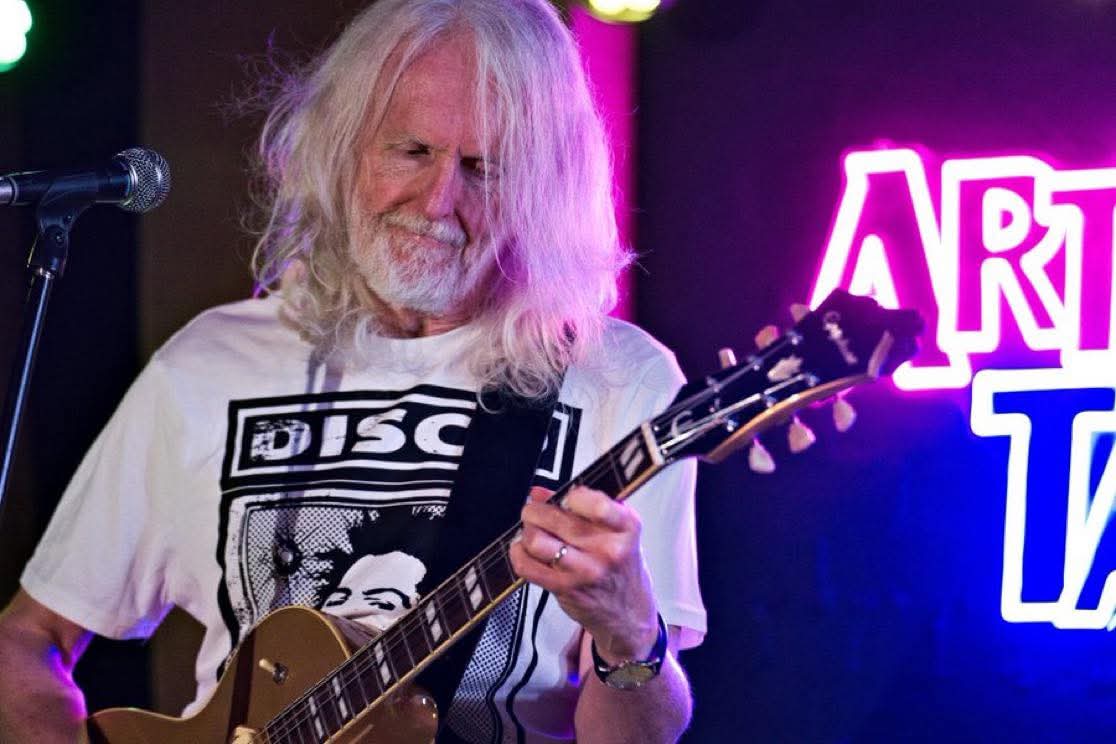
Our website had the privilege of talking to this extraordinarily gifted musician, about the current solo Tour and his life with Prefab Sprout for almost 3 decades, starting with the challenge of giving a new lease of life in a more acoustic live version to the Steve McQueen's album. "The original intention, last year, was to try and get some more countries involved in performing the songs, in occasion of Steve McQueen's 40th anniversary in 2025. There was a good number of places that wanted me, last year, to play there, but, for logistic reasons, it wasn't possible to play in all the places I hoped to. There is indeed, as you mentioned, a follow-up to that Tour, later this year in UK, but I am still hoping to take the Tour to Europe, around America, things like that. But it's going to depend fundamentally by all that happened after Brexit, you know, with Visas, immigration policies and all those things. So, it's an ongoing thing, right? You must know that, on this Tour, I've dropped the bass guitar, so it's me playing guitars only. Regarding the challenges, it was not that difficult to jettison everything off my head, song wise, because, like every album with the Sprouts, after recording the albums, I stopped listening to them the moment they got released, but they are still solidly in my head. So I only get to hear a Sprout record once in a blue moon, like, only every 10 to 15 years, where I'd have a listen. Or, if you really have to, you know, I may hear individual tracks, every now and then, or I might go back to them solely for referencing purposes, but I don't actually listen to them, like perhaps an audience would. As I said, I've got the songs in my head and I remember the songs even from before Steve McQueen came out. I remember the songs from the 1970s and early 80s, when we were still kids and I guess that this Tour is my blueprint of how they were sounding, back then. I can remember some of the great embellishments that we've done, on the record, you know, across, a million different tracks on 2 inch tape machine, all the various little bits that come in and out. Those memorable bits that everybody will sing along with. So, getting back to a part of your question, it wasn't that difficult to pull the songs back to the original chords, those chords shaping that my brother would have shown me in the garage, where we played back when we were kids. On certain songs, I certainly took some liberties with, imagining other people doing them, from Nile Rodgers to Led Zeppelin and the directions that said artists would have taken our songs towards. A bit like Jimi Hendrix toying on a song like Machine Gun Ibiza! (smiles)"
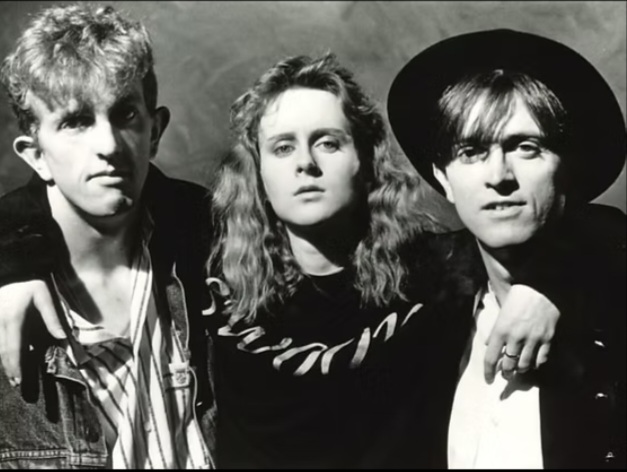
From L to R: Martin McAloon, Wendy Smith and Paddy McAloon - Photo Internet Archive
It's rather interesting that McAloon wouldn't hear entire Prefab Sprout albums for more then a decade, perhaps, because McAloon thought that each album belonged to a specific time of his life and career and therefore needed to stay there, while the band was moving forward to the next project. "It wasn't deliberate, for me, to do so. But I remember listening to Swoon every day, from finishing the record until the release date and the same thing happened with Steve McQueen. You find yourself in a studio recording, you listen to a record non stop for 3, 4 weeks or even 6, maybe, in the case of the Steve McQueen album. Then you would have the gap, between finishing the album and its release date, which took probably about 5 or 6 months. So I think Steve McQueen might have been released in June 1985, whereas, actually, it was finished and completed around my birthday, in early January of that year.. the only thing we did, after January, was to get back in the studio, where we did some little tweaks, extra little work on the vocals and a little bit of mixing on Thomas's (Dolby, the album producer and longtime collaborator of Prefab Sprout) version of When Love Breaks Down. But that was it. Now that you know that your studio work is over, you leave that part behind you and concentrate, from that point, on the next step, which is taking the new songs on Tour. That's what I meant, when I said about myself moving automatically forward in my head not in a deliberate way, it was just part of the process. We went off on tour, after Steve McQueen was released; we came to Italy and we played, I think, around February time. We had been at the Sanremo Festival (the most popular televised music festival in Italy) and I remember us going swimming outside. We were the only people jumping in the pool of the hotel and people were looking at us, like we were idiots swimming in a pool in the middle of February! (Laughs). We had a great time on that Tour, after the Festival. We concentrated on how to perform Steve McQueen's songs live, with me concentrating listening to what Neil (Conti, the band’s drummer) is doing on the drum kit. He would alter his style every day, often interacting, in the interim, with the lighting guy who was, you know, doing things with his, spotlight or, whatever little flashes of light he was working on. And he (Neil) would also emphasise what the lighting guy should do on Johnny, Johnny, while we would also play along with it, trying to catch each other out. Interestingly, by the point we were touring Steve McQueen, we'd actually finished, I think, more or less the whole of Protest Songs as well (a record that, chronologically should have been released after Steve McQueen, but it was delayed, in its release and postponed in favour of From Langley Park To Memphis, Steve McQueen's follow-up studio album). So that was supposed to be our new record. That would be what we'd be listening to, before it was released. For us, once a record it's done, you have an ambition to do something else, completely different and for us, Protest Songs was our next creation, the next best thing for us. We knew we didn't want to do Steve McQueen 2.0.... the minute that album was finished, we knew there 'd be pressure for us to, well, go back to Thomas and ask him "Will you do this, will you do that?" In our minds, we really wanted to do something completely different, something that nobody would expect, like, "Let's go record something somewhere cheaply in Newcastle. And let's not tell the record label". (Smiles) I mean, it's madness, but I kind of hoped we would have done it".
Given the many accolades received from the fans and the press on Martin McAloon's solo Tour last year, one may wonder whether this talented musician would take on Tour pretty much the same setlist he performed last year, or whether McAloon would perhaps consider switching some of last Tour's songs with some never before played live B-sides together with some of the band's long list of hits. "Yes, of course. I play for 2 hours, so the idea is to have an hour about Steve McQueen, while the other hour would be about other albums. I currently have a repertoire of about 60 songs to work from, but the challenge I may see, with those 60 songs, is that you have to play them regularly to remember them (smiles). There are a number of songs that I've never played live before, like The Venus Of The Soup Kitchen (From Langley Park To Memphis), but that would require a choir and I don't think I can even sing it myself with my voice! (Smiles). I am surely going to work on that and other songs that may face similar challenges.. Talking of B-sides, I always get the impression from social media that people love the rarities and B-sides, but rather funnily, when you actually go and play them live, those people wanting them don't show up and there would be only people who like the hits, in the audience! (Smiles) Talking of B-sides, I remember I played once a song called Donna Summer, which was a very early record that we did (it appeared as a B-side of When Love Breaks Down single in 1985). And when it came out as a B-side, nobody knew that we did a Punk version of it in 1978, long before it came out in '85, in a much slower version. So, when I played it in the way it was originally intended in '78, nobody was really interested on that song. It's like, you know, a tumbleweed and you'll think that the audience would be gagging to hear songs like that played live.. but no, instead, they won't give a f***... so, sometimes you think "OK, I'll just play the hits, then". But I might try and get one or 2 B-sides into the show, because I do like a challenge (smiles)."
Martin and Paddy McAloon grew up in Witton Gilbert, a village and civil parish in County Durham, where they often rehearsed together in their dad’s wooden-framed petrol station with Michael Salmon, their former drummer, who sadly passed away in 2023. Being the mid-late 70's, our website was wondering who were the brothers' and Michael's musical heroes and in which musical direction they saw themselves going towards, as a 3-pieces. "We were into all different things, in that period of time, stuff that would have spread from everything, like, from T Rex to The Beatles, through to probably the beginnings of Punk and all of the stuff of 2 Tone Records. Back then, I remember Jerry Dammers from The Specials coming into our father's garage, because his sister lived around the corner in Langley Park. He came into the garage with her, we served them petrol and he was great with us. He was so lovely also on putting myself and Paddy on the Guests List for The Specials gigs, every so often.. I think that by the time Swoon (the band’s debut album) got released, we might have had already 7 or 8 years worth of album songs that we did, from that period. We would attempt also some early Neil Young stuff, like Cortez The Killer and things like that. We loved loud guitar sounds, that kind of raw electric ones. That would have happened, I think, around 1975 to 1978, which is pretty much the same kind of timeline in which Neil Young was releasing those albums, like Zuma for example. But we dug, in time, also in other stuff, like Hall & Oates or Steely Dan, that type of slick production techniques of the West Coast that were happening at the time. But as a 3-piece band, back then, we were really into the Neil Young thing and also Television. The Punk spirit was great, but the Television sound, that was really amazing. They were technical, but also raw at the same time. They were technical in the same way as Steely Dan were, but differently, in their own way. They were a Garage band and we were a Garage band, even more because we were physically playing in a garage! (Smiles) You know, we spent the first 4 or 5 years of the Sprout's existence thinking that we needed a singer. We never thought Paddy would have been our singer. We were always thinking that we were gonna bump into somebody who comes into the garage and needs petrol and they'll turn out to have this great voice and we will become a band with this great frontman as a singer. And then it just happened that Paddy became the singer, fitting very naturally, like the perfect musical glove. We didn't set out for that to happen, it just happened."
Paddy McAloon had been writing song since the age of 13 and by the time Prefab Sprout released Swoon, rumours has it that Paddy had already written songs like Appetite, Faron Young or When Love Breaks Down. Keeping in mind the incredible popularity these songs had back then and still have today, many might have been asking why, instead, Prefab Sprout decided to release an album like Swoon that had some good, solid songs, but came across sonically certainly less cohesive as an album than Steve McQueen. "By 1978, we had been playing already songs like Bonny, Faron Young and Johnny Johnny, but when we had the opportunity to record our debut album Swoon, we thought "What if this is the only chance we'll ever have to make an album?" We had played to death live so many times the songs you mentioned, plus many more, so we thought "Let's do the new stuff only, on Swoon, things like Cue Fanfare or I Never Play Basketball Now, let's go for that!" It was a gamble, yes, absolutely. And so many songs that we used to play live, before Swoon was recorded, were left behind; I remember a song called Geography, for example, or another one called Dignity, which are both great. Never been recorded, never heard it since, but I know we used to play them live. There was a whole lot of songs we played live, which I feel were equally as good as the songs on Steve McQueen, Swoon or From Langley Park To Memphis. Those songs were great fun to play live, but I've not heard them since 1979.. and there are still lots of songs like that didn't see the light of the day. There's a song that I can still remember, a song that we sent to Brian Eno in 1973, at the time he had just left Roxy Music and was setting up his own record label. We sent a demo tape to him and I still remember the opening part from that song... yes, there are so many songs we used to play live that I have not heard in almost half a century."
After the release of Steve McQueen, the British collective returned to the studio to record, fairly quickly, another album, called Protest Songs, but its release got postponed and another record was chosen instead, called From Langley Park To Memphis, with many fans suspecting that this decision might have been influenced by the band’s then record label. "When you say "influenced", it may sound like a weighted phrase. When you are young, as we were back then, you learn things in retrospect. Basically, when you put out an album, there's an 18 month promotion cycle that you are contracted to enter into. If you stick out another record, while you're supposed to be still doing interviews for Steve McQueen, like we were doing, they (the label) would just look at you like "what the f*** are you doing, man?", Because Steve McQueen was still gaining traction, back then. So this is what we're working on. They were very nice with us, at the label, saying things like, "well, this album can come out some other time, sure." Then, as time went by and it was time to do the next record, I don't even think that there was a discussion between all of us, like "Well, what about Protest Songs as the next album?" In the same way that Paddy has got some of the songs produced for Protest Songs, what's he now interested in? Is it about all the songs he has been writing in between Protest Songs, Steve McQueen and now? He had written, by then, some more songs, like I Remember That, Cars And Girls, King Of Rock'N'Roll and his priority was who was going to get to produce these songs. Through those songs, we could feel that what then became From Langley Park To Memphis, it was going to be the next record, for Paddy. Going back to your question, choosing From Langley Park... as our next album was never an imposition by the label. They had already told us that they would find space for Protest Songs, at some point, therefore we just moved on with the next record. For Protest Songs, it felt a bit like having another barrel of your gun loaded that can go out sometime (smiles)."
Bluebird Reviews came across, a little while ago, to an anecdote from Producer and Multi-instrumentalist Thomas Dolby from a national newspaper in UK, reminiscing the time that he was working on Steve McQueen with Prefab Sprout. He stated that during the making of Steve McQueen, the band was continuously hungry, with Wendy Smith often saying to Paddy things like "Hey, let's go out and have a quick bacon roll", resulting in the band disappearing for an hour or so, grabbing a proper pub lunch instead. Perhaps writing one of the album's many hits, Appetite, was an involuntary nod to that anecdote? "(Laughs) No, no, it wasn't, 'cause he (Thomas) wouldn't have known us, at the time, very well. But it's very true, we all couldn't stop eating and for me, I still can't stop now! (Smiles) I have to eat all the time. We did eat a lot indeed and to be honest with you, I remember being in Milan, something like 40 years ago and having that many lobsters in one sitting that I felt I was an oceanic disaster area! (Laughs) I still eat a lot, these days.. You would see me coming off stage, after a gig and just eat and eat and eat. All I've thought about today too, so far, was food. All I thought about yesterday was food! Fortunately for me, I remain pretty much static in weight but hey, I'm always hungry. I know Thomas is always going on about my appetite (smiles)."
While Paddy McAloon was leading lyrically and musically Prefab Sprout, it's also true that the band possessed a very strong Rhythm Section made by Martin McAloon on bass guitar and Neil Conti on drums, with many fans and members of the music press praising especially albums like From Langley Park To Memphis and Jordan: The Comeback (1990) for the powerful musical dynamic between Conti and McAloon. "OK, two things here: Neil is always perfect, right? He is just a wonderful, wonderful drummer, he's also a great bass player, a good keyboard player and he can sing, he can do it all. He's very, very complete, in his musicianship and about myself, well, my life as a musician was confined solely within Prefab Sprout, while Neil played every day, not only with us but on other parallel projects too (Bowie, Jagger and Level 42, among others). I only played on my brother's songs. Truth to be told, I never thought really of myself as the greatest bass player or musician, I just enjoyed playing those songs very much. I wanted those songs to get out and I wanted Paddy to be recognised for his song-writing and singing talent. I hope that, to the eyes of the Sprout's fans, that I played well enough on those records, but Neil, he's just a proper player and he made us sound better. That's why we got him in the band in the first place. There were some great drummers that came along and auditioned for us, but Neil's drumming, it was something else, he just made us sound and play so much better."
Being the band’s frontman and chief songwriter, Paddy McAloon might have been identified, at times, like the sole decider of the musical direction too of the British collective and our website is intrigued to know whether, at any point during Prefab Sprout's existence, Paddy left to Martin and Neil any creative leeway at all, especially from a rhythmic aspect, in the making of new songs. "In the early days, I think, he left a lot of it to us, yes. Back then, we didn't have demoing equipment and we didn't get our first four tracks recorder until Paddy was doing the demos for From Langley Park To Memphis. So that's where he started to create an idea of what the songs should sound like. He needed to have one of those tiny drum machines that gives you the beat you need, because, the better the demoing gear you got, the more proficient you became in arranging the songs. In time, the demos became more elaborate; by the Jordan: The Comeback album, Paddy had a very good idea of how the songs should sound an the kind of sonic input that Neil and I had to provide, and so Thomas (Dolby). Sometimes Thomas would say to Paddy, "That's great. You could just release these songs now as they are, you don't need to do anything with them". But Paddy kind of knew that you can always get the songs sounding better, or things like, you can play the drums better. The drums can always sound a bit freer and a bit more "in the pocket", just like a proper drummer would sound and so Neil, of course, very well did. So, you know, Neil and I went along with that kind of things, generally. Another thing we were doing, it was concerning string arrangements for songs on the Langley Park album, like Hey, Manhattan!, Nancy (Let Your Head Down For Me) and possibly Nightingales. On Hey, Manhattan!, for example, we had very little idea of how it was going, it didn't seem to sit well the song, with Paddy and all of us. We wanted to do something with it, but we weren't sure how and where it was going. When we did a demo of it, the bass guitar part of the song goes all over the place and rambles quite a bit. Then, when it was time to do the string version of it, we did it without the strings at first. I played the bass part and then, once we got an arrangement done for the strings and they were recorded, I changed my bass parts accordingly to what the double bass player (Rick Standley) was doing. Similarly, we had a percussion player coming, called Louis Jardine, who sadly passed away just a year or so and he was fantastic; he laid down lots of percussion, which gave you a sense of, well, what do I play here and there, how do I blend in with this, rather than just standing out. All the overdubs created a new dimension for me to work with. So the stuff that I would have put on first, would have been taken off and then replaced with things that were more appropriate. Those were the kind of creative things that we did. We did a version of Life Of Surprises for From Langley Park To Memphis, but we never finished it. We had a demo version of it that we've had done in Newcastle, on which we did try to do a more Funky version of, a little like in Prince's style, so to speak. But we failed, it didn't get anywhere, so we just dropped it. Years later, though, at the time we were putting out Protest Songs, the record company had heard the original demo of Life Of Surprises and they said to us "that's it, that song needs to go on that record, we need a hit like that on the record". So, we used that demo, in the end and the rest is history."
Another very celebrated record off Prefab Sprout's discography, it is Andromeda Height, which was highly prayed, at the time of its release, in UK and all around Europe. We cannot resist to ask Martin McAloon a question about the making of that splendid album, like where the band was, both artistically and personally, when the time came to record Andromeda Heights. "Hmm, that's a strange one to answer.. A lot of that album, it is our Paddy's doing. He did the demos at home, in his own studio. Then he replaced part (or even entirely replaced, in case of some of them) of said demos with part of recorded versions of what he'd already recorded. So it was very much like just replacing the parts, a matter of chopping and changing. From a record company's point of view, back then we weren't seen as part of the Brit-Pop movement. Brit-Pop was, as you might well remember too, all about Blur, Oasis, Pulp and all those younger bands that sound like that, while we were seen as, perhaps, something of a time warp. We were hungover from another era, where production values were different and glossy, rather than rough and ready, therefore it wasn't really about, I feel, where we personally were. It's how we were perceived by the record label. At that time, I think Muff Winwood, the A&R executive who brought us originally to the attention of CBS in the 80's, he was moving out of the label Sony/Epic and his replacement was a guy called Dave (David Balfe). He'd signed Blur to his record label, before he moved to Sony and so we were kind of an odd ball for him. He had great success being the new kid on the block, but he probably came in thinking about us in terms of, "Who the F*** are these guys? Are they Pink Floyd or something?" (Smiles). Back then, you know, we were having our own studio and went out drinking every night.. I guess we were just older and wiser and aware that those kind of things in the music business happen and that's natural. I don't think we felt hurt by that. We weren't, really.. we knew that that was the arc, for a record label. You want bands at the start of their career, you want the audience to be young with the band and to grow older with them and to get married at the same time that your heroes in the band get married and perhaps, even get divorced at the same time as the bands! (Smiles) So, yeah, we had probably closed our cycle, in the eyes of the label and we were now on the back end of it, according to their view of us as a band."
Producer, singer-songwriter and multi-instrumentalist Thomas Dolby has been, in many respects, the hidden fifth element of Prefab Sprout for many years and a very important collaborator of the band in helping to shape the distinctive sound of some of the band’s albums. Given the long running musical association with Prefab Sprout, we ask Martin McAloon to tell us about his immediate memories on working with Dolby and what did he feel of the special artistic alchemy between his brother Paddy and Dolby, in the musical build-up of many Prefab Sprout's songs. "It feels strange to answer your question, because I just came back from a Tour I did with Thomas. I've been out for 2 weeks for that Tour and been back home for like, 3 weeks now. When Thomas played in Newcastle, I arranged for Paddy to come out and we all went for lunch, myself, Paddy, Thomas and his wife Kathleen and it was so lovely and great to see Paddy and Thomas both together again. They both fell straight into being themselves, as they were 40 years ago and I think that, to keep something like that alive, without seeing each other for about 30 years, it takes a special relationship. They had such a good laugh and it was so much fun to see the two of them being reunited. And that's what it's like with Thomas. It's hard work, with Thomas, because he was very particular, like, he would work on something to the infinite degree, to get it right. But, at the same time, he would have sweeping ideas as well, which didn't take as much precision. When we were on tour, lately, at one point the touring setup that he had, it involved him and two band members, but also a bass player, who wasn't allowed into the country for the Tour, a lady called Ana Pshokina, an Ukrainian citizen living in Portugal. For some reasons, she was denied access to our country. So, one of the things that happened, was that Thomas had to do videos screened on stage with Ana playing and having them all synced up. As you can imagine, a lot of this took an enormous amount of effort and computer programming knowledge. Thomas would sit there on most soundchecks, tweaking computer chords and whatever else needed to do things and get'em right. He apologised to me, at one point, because I was playing guitar with his band, therefore I had to be there for his soundcheck too. I'd have to wait, while he sorted everything out on the computers to run the show and before I could do my soundcheck, he apologised to me, on the second night, saying, "Sorry for all this messing around", to which I then replied "Thomas, I've known you 40 years and that's all you ever do! We'd wait for you to figure out whether there was a 30 millisecond delay or a 90 millisecond delay on the screening and that would take 3 or 4 hours for you to figure out which one and that was just on one word!" (Smiles) And he just started to laugh. That's what it was like, with him. It was always and still is a good laugh."
With the abundant catalogue of songs written by Paddy McAloon, it felt a bit of an artistic waste not to Tour a lot, for Prefab Sprout, from the late 80's and throughout the 90's, something that potentially might have not helped to sustain Prefab Sprout's popularity, especially in view of the fact that the band was, in the meantime, still keeping on releasing strong records. "I try not to think too much about what could have been, you know, if we would have we been on Tour more regularly. We were never big on promotion and even to this day, like, say for example, today, should I, rather than sitting here and have a lovely chat with you, doing tweets instead? I should be promoting my own Tour, should be doing this, should be doing that? I have endless lists of things that I should be doing on socials... And do I do then? No. Because I would rather prefer to sit down and play songs like Wichita Lineman by Jimmy Webb on the guitar for 2 hours, because it's a lot more fun for me to do instead. If you're the type of band that needs media attention, to do that kind of promotion and to get the hits that you want, you have to give up a certain amount of your life. And you have to believe in it totally. You have to believe in the motion completely as much you have to believe in the music. And we've always believed in music, but we've never believed in the promotion, I guess."
The new millennium started in a positive way, for Prefab Sprout; despite the fact that Wendy Smith couldn't be part of the 2000 Tour for personal reasons and working commitments, Martin, Paddy and Neil returned on performing live, with so many excellent reviews coming from the press. But then, by 2001, working on what would have been Martin's last album with Paddy and Prefab Sprout, The Gunman And Other Stories, Neil Conti didn't take part to the album, with only the McAloon's brothers left off the original line-up of the band to work on the album. Having worked for many years with Conti, it must have been a little challenging for the British bass player to work with a new drummer (Richie Morales), instead of Conti, on a record that had such a different sonic outlet to previous Sprout's albums. "About that Tour, one day, it might have been around '99, couldn't tell you when, precisely, I bumped into my brother Paddy by accident in a shop and he said "I think I'll come back out on tour!" This was totally out the blue, for me, wow. So I go "OK, you do know though that we have nothing to promote". Because, as I am sure you know, you suppose to be out on Tour mainly to promote a record and, at the time, I don't even think we had a record label. I think that, at the time I met Paddy at that shop, the label might have just said goodbye to us. I can't really remember exactly, but I think it was along the lines of that. He just said "Yeah, I know, but I just fancy it". What I think he fancied, it was the idea of doing something that nobody expected him to do and I think that's what really tickled him. That's what he liked about it, that we didn't have a record to promote, the philosophy was just "Let's just go and have some fun. And we'll not do a big band. We'll just get Jess Bailey into playing keyboards and we'll not even do lots of synthesisers". We'd just have a piano sound, Neil on drums, we had an organ on stage, so it was very much like stripping it down. It was all about playing the songs, which, by the way, were not all played live in the same style they were originally recorded. We'd play some of them like they were on the records, but things like If You Don't Love Me or The Sound Of Crying, we did completely different takes on them live. We just went out and had fun, so it was a strange string of gigs, that one... Yeah, it was funny to bump into each other in a shop, where we stood by some coats, with him at some point asking me "Do you fancy one of these coats, Martin? Yeah, let's go on stage playing with these ones on!" We ended up both buying the same leather black coat, how daft does that sound?? (Laughs) When we were then starting thinking to the next album, we received the thumb up from Tony Visconti, saying that he was going to produce us on what it then became The Gunman And Other Stories. But working with Visconti involved having to record the new album in New York and because we didn't actually have a label, the budget for the record was a little tighter than before. Truth to be told, even if we had a record label, at that time, it wouldn't have been the same kind of deal that we would have struck with Sony in the 80s. Fortunately, we then made a deal with EMI Liberty, for that album, a label which was more generated by ourselves, rather than having large advances to pay for things. By all intents and purposes, it was effectively a self made record, with Tony at the helm. We recorded the album in Tony's basement studio downstairs. There were financial practicalities attached to this recording process, as I mentioned before and we could save money recording in this way, rather than booking a recording studio for 6 months. Sonically, I actually love the Gunman album for its sound. I don't think I've ever sounded that good and at my most professional in my career. I can hear my bass on that album, I can hear all the other people playing... I remember thinking, "Oh, I'm sitting in good company there, I don't think I've let the side down!" (Smiles) The thing I remember about working with Richie Morales and his drumming style, was me watching Tony setting the kit up. On the first day of the recording of the drumming parts, in Tony's Live Room, Richie went to set up the kit and then Tony himself goes in there and he just puts a few microphones around it. Then Tony goes to the desk, puts up the faders and all of a sudden, the best sound in the world comes out, with no trickery, nothing like that. It was like, "OK, let's go for a take" and I said to Tony, about that magnificent drum sound, "How did he do that? How did YOU do that?" I sat in studios for hours, once the drummer's gone through everything and Tony said to me, "Well, listen to him play. He's balancing the rhythm in his head. What I did, I've just placed a couple of overheads behind his ears. If his ears are hearing that and that's good enough for me, then all is well. I've put a microphone by the drum and one by the snare. He clipped a microphone to the hi-hat, so it went up and down, as he released his foot, so it was equally spaced. And that was it." Then he added "He is not going to need any editing, I don't need to do a close mic, nothing. To me, he's playing it properly". And all that, it took seconds to do and it was just amazing to observe the attitude and the skills involved. I just thought that the whole process was simply great. And as an added bonus for me, I got to play, during the recordings, on the bass guitar that was on all those T Rex records! That is one of Tony's most precious belongings. It's the same bass guitar used by T Rex, on many million-selling records. What a treat for me!"
The Gunman And Other Stories was Martin McAloon's last appearance on a Prefab Sprout record. However, given how much Martin has been supportive of his brother Paddy's talent through the decades, we are curious to discover whether the Prefab Sprout's talented bass guitar player has listened and appreciated the latest Prefab Sprout's albums, following his departure from the British collective. "I managed to listen to I Trawl The Megahertz (initially released in 2003 under Paddy McAloon's own name and then re-released in 2019 under Prefab Sprout's name) at the time we were recording The Gunman album. I had the demo of that record and I would listen to that every night and my whole thought was "How do we get that released?" That album is actually one of my favourites and I find quite funny when people would say to me " You are the Sprout's bass player, but you didn't play on this record!" I'd say to them, in return, that "I didn't need to play on that record to actually know one of our records, as long as I can get it out to the public". And in that respect, because I was still in good terms with EMI, I like to think that my good working relationship with the Managing Director of EMI Liberty, Steve Davis, kind of helped, in getting that record out there. So, you know, I played much as a part without playing the bass and nobody still ever know. But I don't care.. It's like, you've got a record that stands a test of time. It's beautiful. As I said, it is one of my favourite Sprout records on which, ironically, I never played on, but I was part of, in a way."
Prefab Sprout was not only one of the most inspired and talented British bands of the last 4-plus decades, but they also encapsulated the ideal core values of what a band should be like. Values that would include genuine friendship, camaraderie, love and respect for one another and phenomenal romanticism and grace in their songs. Before parting company with the ever affable and incredibly modest human being that Martin McAloon revealed himself to be, during our conversation, we'd like to ask him to sum in few words his great adventure with one of the most inspired and loved British Pop bands of the last half a century. "I kind of liked what you just said, about the band and the relationship we had and still have with one another. I think you kind of got it. My love of those Prefab Sprout's songs is so strong, somehow even stronger now than it was then. I still adore the songs that my brother wrote. I look at all the lyrics he wrote in all these years and the intrinsic power that they still distil in these days to so many people. When you listen to any of our records, you hear a line of one of his songs, a line that will suddenly pop out from somewhere and will hit you straight to your heart. In the course of our conversation, I mentioned a song that was never recorded, years ago, called Geography and one of the lines in it says ".. The romance of the open road, I'd rather use a telescope..." and that line, for me, it sums up Paddy and the millions of inspired lines he has written in his entire time with Prefab Sprout. And every time I hear those lyrical gems from Paddy, I just think, "Yeah, I'm glad I was part of that!"
Martin McAloon will be touring the United Kingdom in 2026, with the Tour dates available at Martin McAloon's Official Website