One of the greatest gifts an artist can be provided with, it is resilience; that gut belief in yourself and in your talent, belief in what solace and motivations music give to said artist every day and to firmly believe that those liberating feelings can be projected to the fans through the power of music.
Someone that has never lacked in resilience and belief in her own, enormous talents, is the American Powerhouse singer-songwriter Sari Schorr, an artist that since the very beginning of her career, back in 2016 and through the debut album aptly called A Force Of Nature, enchanted the world thanks to inspired songwriting, an incredibly strong and soulful singing voice and Schorr's extraordinary ability to blend Blues, Rock and R&B with such inner ease, on and off the stage.
When Schorr's popularity reached its very peak, the 2020's pandemic abruptly stopped (together with many more millions of artists across the planet, sadly) her rise to worldwide stardom.
Throughout the last 5-6 years, the American artist has been working relentlessly on writing new material, but her quest for "feeling" that what she was going to release was her absolute best, put on the backbench almost two albums on which Schorr had already invested a lot of her time and resources.
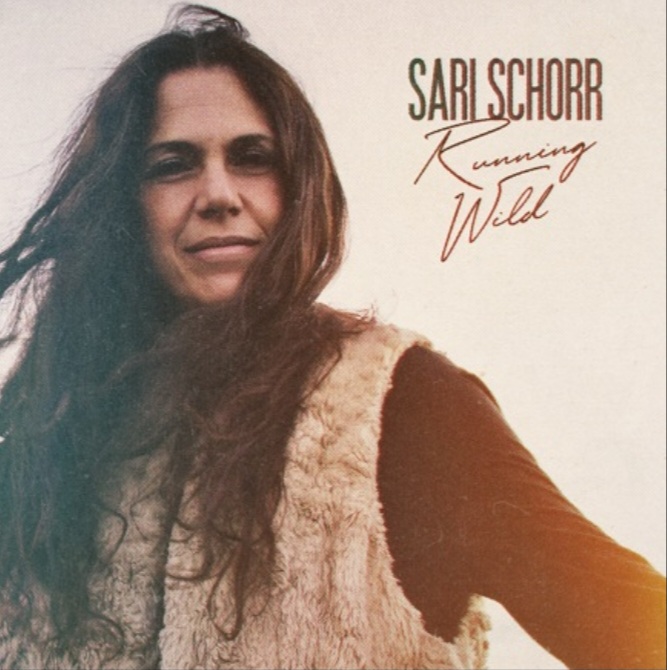
But if it's true that some things happen for a reason, after signing for a new record label and collaborating with a brand new Team of producers and studio musicians, Sari Schorr is due to release, on 9th October, a brand new album called Running Wild which is, frankly, an authentic masterpiece in singing and songwriting, undoubtedly, her best body of work to date.
Our website managed to catch up with this portentous artist just before the beginning of Schorr's Tour in support of Running Wild from her home in New York, with Schorr sounding incredibly energised and excited by the forthcoming release of her brand new record.
BR - Sari, thank you so much for talking to us at Bluebird Reviews and many congratulations for such a stellar album like your new one called Running Wild truly is. After so many years without recording a studio album, what was your immediate feeling, once you wrapped up Running Wild?
SS - So, I have to say, when we finished Running Wild, it was... all right, I'll tell you a story. A friend of mine has a young daughter who had a baby, but she didn't know she was pregnant. Now, I don't know how this happens, but it happened. And I had the same feeling. I delivered this album without knowing that we were going to have something, you know, that we were so proud of in our hands. I had been working on two other albums at the same time, one of them for several years and another one that was almost finished. But I was really having a hard time feeling that either one was presenting the songs in the best possible way. I didn't think that neither of the albums was really good enough to share with the world. And, you know, if you respect people, you respect their time. I just never want to ask people to listen to something if I don't think it's my best work. The world is filled with mediocrity. Don't contribute things that you don't feel deserve people's attention. And it was a problem, because the old record company that I was with, needed a record. My agents needed a record, because that's how you promote a tour. Nobody will write about an artist coming to a market; they will write about an artist with a new album, and that's what drives ticket sales. So, without having an album to fuel the momentum of a tour, and also to put income on a record company's ledger sheet, I was under terrible pressure. Everyone kept saying, "Just put it out. Put out something that's good enough." And I couldn't do it. Couldn't do it. That costed me my relationship with my former record company and with my former management. But I really felt that, to respect the fans and the people that I wanted to share music with, it had to be the right thing to do. So, when this album came along, I felt that it was undeniably the right thing. And so was the music, that I really was confident in sharing. It was exhilarating, because I was, you know, just trying to create something that I could be proud of, and it felt like a gift. I do really feel that this album came into my life as a miraculous gift.
BR - What was the decisive factor, about Running Wild, in terms of knowing that those songs were the right songs expressing exactly what you wanted to express?
SS - Well, Gio, it was actually the very first song that we wrote, which was Running Wild, oddly enough. I mean, that song became the defining song for the whole album. It opened a door and proved to me that the creative vision I had for this record would be achievable. The fact that it was the very first song that we wrote, really inspired everything that followed, because we knew we'd found something that was fresh and original. The producers, Jamie Walker and Luke Paget, completely supported my vision. I didn't feel as though I had to become something else, or be someone different, to fit within the goalposts of a narrow definition of who I am, as an artist, because none of us can be defined in simple phrases. We're all complex human beings with a lot of different colours, with lots of light and shade to who we are. Musically, I have so many different influences, from Blues and Jazz to Soul, Rock and R&B, that being able to draw on all of those influences with producers who supported that vision, made it a really easy record for me to make, because it was just whatever felt the most honest, the most natural. In the end, I think that when we can all find a way to be the truest versions of ourselves, and when we're with people who let us be the best versions of ourselves in their presence, that's when we can all succeed. It's really quite simple, right? (smiles)
BR - So, it sounds like Running Wild was the first drop of colour on a blank canvas that you had at the time before you started writing. It also sounds as though none of the songs from the previous two records that you subsequently shelved were included on what eventually became Running Wild. Is that right?
SS - We decided to just follow the inspiration. We talked about pulling in some of those other songs, but we were on such a prolific creative streak, that we just felt, "Let's see what happens with the next song." And if we'd run out of ideas, we had those songs, and some of them were great, so we could pull them in. But we were having so much freedom, starting with a blank canvas, that it allowed us to throw down anything we wanted. And I needed that reset to really go back to who I want to be, as an artist and how I can create art that connects with other people. I mean, that's really the most important thing. Music is a pathway for people, a conduit for connection. And just having that freedom was really the right approach for this.
BR - The first feeling we all had, at Bluebird Reviews, after the first spinning of Running Wild, was just "Wow". There were so many emotions interlocked with one another, throughout the album's songs that really resonated with all of us at Bluebird Reviews. Did you feel like being finally able to release something that was uncompromisingly you?
SS - Yes, this record looks the most like me, sounds the most like me, and is the most honest piece of work, because we weren't creating it for a label. I was free of all obligations at that point. I no longer had a record deal, and I no longer had a management deal. I had really stepped into a new situation. It was a great opportunity for creative freedom, but I'll be honest, it was also very frightening. All of a sudden, I was a completely independent artist again. When you have a record deal and you have management, there's a real sense of comfort, because you've got people behind you helping your music to reach a bigger audience. And all of a sudden, I didn't have any of those things, because of my own choice to say, "No, I can't put out these records." The consequence was, "OK, now here I am. I have all the freedom that I need." And it really turned out to be a gift, as I said before. Also, when we try to do things with too much expectation of what something has to become, it diminishes the creative freedom that you have to embrace in order to find something new. Because, if you're going to do anything safe, create something that's not going to upset too many people, that's going to be easy and obvious, and that fits into a very easily definable package, then you're not going to surprise anybody. But you're also not going to create something that has the emotional impact of something that is truly original and truly honest. We've all heard records that sound generic. We know the formula. We've heard it thousands of times, and our ears know the difference. But I'm lucky. I have a wonderful record company now, Provogue Records, who understood the vision and wanted to support what I'm doing artistically. So, I'm excited for people to hear the work. My greatest hope is that it connects with them and moves them in a way that's meaningful.
BR - For Running Wild, you decided to reshape the Team working with you on the making of your new album, from your formidable studio musicians to your producers, Luke Paget and Jamie Walker, a decision that most certainly paid off, judging by the high quality. How much do you feel that this reciprocal trust between you, your musicians and your producers impacted in the right direction the impressive songwriting, vocal delivery and powerful arrangement expressed on Running Wild?
SS - It's a non-negotiable thing. If you want to make a world-class record, you have to have world-class people who work together to bring a song to life for the sake of the song, not for the sake of showcasing their playing or their brilliant production ideas. Every decision we made, as a vocalist and as a songwriter, every lyric I wrote, every melody I chose, came down to one question: does it serve the song in the best way? The musicians we worked with, and Jamie and Luke, who also did a lot of the playing on the record, were always focused on what served the song best. My live band is the same way, and I'm working on an album with them as well, because they are world-class players. The way Running Wild happened, was that I was on tour, flying to Scandinavia, then going back to Lancaster to do a couple of songs, then flying into Romania, and then flying back to Lancaster to do a few more songs. So, it wasn't a situation where I had the luxury of bringing in my band, who are from all over the UK. We talked about it, and everyone said, "Look, you've only got a few days here and there, and it makes sense to just make the best record you can with the best people. So, whenever we had a few days off, we would go into the studio recording, trying to make advantage of any window of opportunity available to us.
BR - There is so much release of positive nervous tension too, throughout the whole of Running Wild, something that we are sure your fans will love too. For a very open and emotional person like yourself, which were the songs within the album that perhaps took a bit longer to write and arrange in the right key, to best express the lyrical context of them?
SS - This album is unlike anything I've ever done before, because I wrote it very quickly. Jamie and Luke would prepare a track with just a drum groove and Jamie playing chords. They'd play it for me and ask if I had any melody or lyric ideas. For most of the songs, I had the ideas on the first pass. I would listen for about 15 or 20 seconds and say, "OK, hit Record, I have an idea." And they would say, "You have an idea already?" I'd say, "Hit Record before I forget, because the ideas will leave as soon as they arrive." So, we would record, I'd work out the melodies, and then that night, in the hotel, I would work on the lyrics. That's how fast it was. But the most challenging song to write, was the one about my dad, because we had a very complex relationship. He was always my hero, but we had a complicated relationship. He taught me a lot. I was a very stubborn kid, and I was very curious. It was hard for my dad to protect me from myself, because I was running wild. I didn't understand the constraints or the caution, because I was a risk-taker. But my dad taught me about resilience and never giving up. He had a hard life and suffered a lot of tough breaks, but he never let anything get him down. Trying to write a song like that, without it sounding too depressing while trying to find a positive release for all of the suffering that I saw my dad go through, was difficult. I wanted to turn that experience into something positive. So that was a hard one. And still, singing that song live is the hardest thing for me, because I want to be the best storyteller I can be. But crying through a song isn't really being the best storyteller; it's calling too much attention to the storyteller. I'm still trying to find my way through that song and figure out how to perform it properly. But yeah, I think my dad would be really proud of it. He passed away many years ago, on Christmas Day of all days. That kind of defined the sort of luck my dad had throughout the course of his life.
BR - One of the many favourite moments of the album, for us, comes right at the very end of Running Wild, with the song Finding My Way, with lyrics we find ourselves singing by the second spinning of your record: "....taking my chances, taking my time, walking on thin ice.... it never comes easy, out of control, searching for someone I've never known..". Where do you feel an artist strikes the balance in music between finding individuality, freedom of expression and self-therapy, Sari?
SS - Well, I think the creation part of art is very therapeutic. I started songwriting because I had a hard time expressing myself. I was very shy, and music gave me my voice. It gave me a platform where I could communicate things that were difficult to talk about through music. I often think about how my grandmother used to worry about me. She could see that I had very high highs and very low lows, with not a lot of middle ground. She worried that, you know, this child was so young and yet thought so deeply and got so depressed. But I think that, if I had just been a happy kid, and had always been a happy person, not looking at the suffering in the world, the tragedies and the challenges so many people have to overcome, I don't think I would have been driven to write songs. I think part of that need comes from a desire to reconcile how the world makes sense, how I fit into it and whether my life has any value or meaning. What is my purpose for being here? What can I create that becomes important to other people, rather than just taking up space and consuming resources? What can I give back? So, songwriting really is the most therapeutic thing that I do for myself. That, and running, are the two things that can truly get me out of my head and give me a better perspective. Yeah, definitely. I'm tough, you know...
BR - The quality of your vocal delivery throughout Running Wild reaches stratospheric peaks, in my opinion, more than any of your previous records. What is your recipe to keep the strength of your voice at such high standards, Sari?
SS - You know, unlike most sensible singers, who do have some kind of routine, I don't really do anything special. I showed up to the studio, once, to do a session and a very good friend of mine had also been hired for the same session. She came in with all kinds of devices and contraptions: a steaming machine to steam her voice before she sang, all kinds of drops and sprays, and everything else. And I had nothing. I had a cup of coffee, which you're not supposed to drink, because dairy and singing somehow don't go together, but it works for me. So, what I do essentially is really just try to stay healthy, because my body is my instrument. That's the hardest part about being a singer. I can't just grab a different instrument, so I have to try to stay healthy. And that's the hardest thing on tour, because you hardly get any sleep, you're in a different hotel every day, and I love doing meet-and-greets after the show. The challenge is staying healthy through all of that. My routine is running and yoga. I've also just joined a boxing gym. Yes, I agreed to do boxing as long as I don't have to hit anyone and I don't get hit (smiles). My aim is very good. I hit the trainer's big gloves, and that's great. But I love it. It's really, really good for getting some of your built-up aggression out. So, that's about all I do: trying to have a healthy diet and not get too much into my own head worrying about things. I tend to be a big worrier, and that's not healthy. I'm trying to shut that down and just live in the moment. I try to appreciate the moment and appreciate that we have something good to do together. When people come together to hear live music, that's a good thing, and that's healthy.
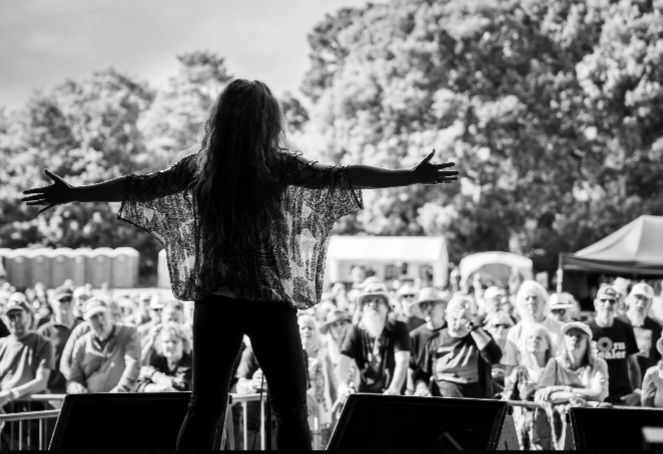
BR - Your Tour in support of Running Wild is due to start in a few days' time in London, to then run through the whole months of October and November all around Europe. How excited are you to bring the new songs on Tour and how appreciative are you of the fabulous loyalty that your many fans have proven and still prove to you, after your many years in the music business, Sari?
SS - Yeah, well, that's why when I'm out on tour, it just feels like I'm visiting friends, some of whom I haven't met yet, but others whom I've seen so many times over the years. It makes you feel at home. That's why I'm never lonely, when I'm out on tour, because I really do feel like I'm with an extended family. I love my band. They are so supportive and we've built a fantastic family together. Then, when we're out on tour, all the fans who come out feel like part of that big family that we've created. I always say this: it's the reward for all the hard work. There's a tremendous amount of work involved in setting up a tour, and then, when you finally get out there, it's like, "OK, this is why we put in all these crazy long hours. Here we are now." It's so exciting to be able to share new songs, because I'm so proud of this album. I think these songs have come into the world at a time when people will really enjoy them. Well, I shouldn't say people will. I should say I hope people will. I enjoy them, and I hope other people will enjoy them too. I think there's material here that everybody can connect with. And when you connect with a song, when you hear a lyric and say, "Yeah, you know what? I know what that feels like," it gives you a sense of connection. It reminds you that you're not alone in the world. There's nothing especially unique about me. I have the same experiences, hopes, dreams, failures, and challenges as everyone else. Maybe I've had more failures and challenges than most people, but that's probably the only difference. We all share these experiences and through them, we find a connection. Humans are built for connection. The world we live in now often pushes us in the opposite direction. It's often destructive to genuine human connection. That's why live music is so important. It's a remedy for many of the challenges of our modern world.
BR - Sari, there is a marvellous Latin phrase called Redde Rationem, referring to one's decisive reckoning, that moment when someone takes accountability of something in their life. How much has the making and release of Running Wild been instrumental for you to find that ultimate reckoning in your life and career, to allow you to take that leap forward where, paraphrasing one of the album's songs, the black crow was finally allowed to fly away?
SS - What a great question. I know that term in Buddhism as Satori, an instant awakening. Because I was struggling for so many years, before this record, to deliver a record that I truly believed in, I started to doubt whether I deserved to be successful in music, whether I deserved a career as a singer-songwriter. I really began to doubt myself. There was a lot of noise around me saying, "Well, you're never going to be happy with anything. You're too much of a perfectionist. If this isn't good enough, nothing will be good enough." And I started to wonder, Am I just sabotaging myself? But this record, the way it happened and the fact that it was such a rewarding, beautiful experience in every possible way, really felt like a sign. It was as though something was saying, "Here's your sign. Yes, this is what you're meant to do. Stay the course. We're allowing you to get back to who you are, and we're opening a door for you. Here's the record we've given you." Because I really do think, as I said few times before, that my new record was a gift and I was lucky enough to grab hold of it. "Here it is. We've opened the door. Now go." That was the Satori moment for me. It was the realization that, yes, this is meant to be, and I am doing what I was put on Earth to do. This record has given me the confidence, the proof, and the validation that, yes, it's time to run wild.